STRAT. Light, layer by layer.

A modular bedside lamp: magnetically held layers, 3D printed in Romania, no cloud.

Assembly drawing: the layers, spaced apart on the same axis.

How it works.

STRAT is a lamp made of layers. Each layer does a single thing and attaches magnetically to the one beneath it. Scroll, and we build it together, from the bottom up.

The lamp here has five layers. We set them down one at a time, from the bottom up.

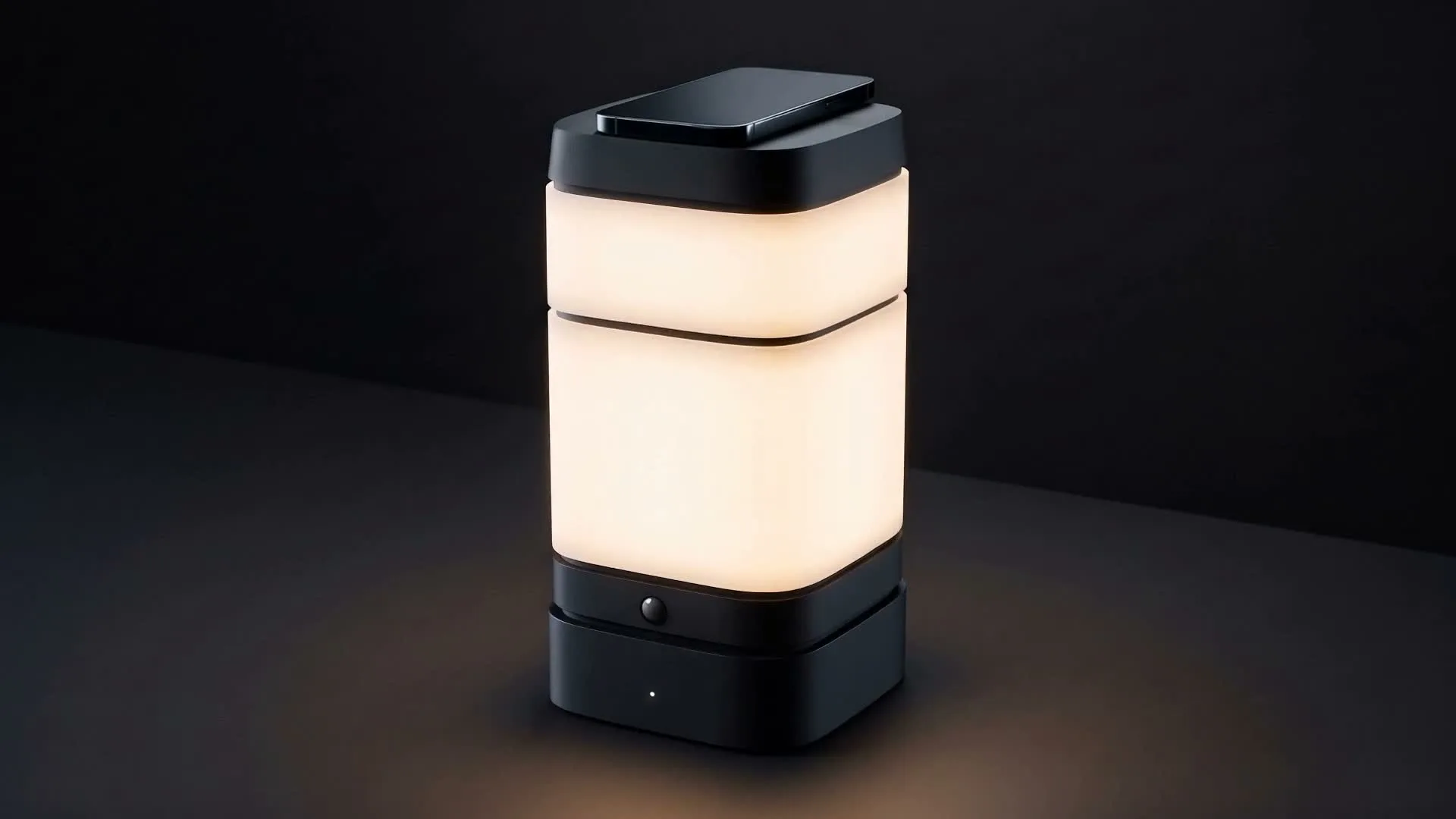
The STRAT lamp assembled and lit, on a black background. A render of the current design.
  1. It all starts at the base.

    Everything electronic lives here: a Raspberry Pi Pico 2 W, USB-C power and the contacts for the layers above.

    The base recognises every layer you set on it and puts it to work, with no configuration at all.

  2. One eye, tilted toward the floor.

    Behind it sit a motion sensor, a light sensor, one for temperature and humidity and one for air quality.

    At night, when you get out of bed, it slowly lights the bottom slice, just enough to see where you step. It switches itself off once you are back in bed.

  3. Warm light, in slices.

    A slice holds a ring of RGBW LEDs with warm white, behind a matte, translucent diffuser. The lamp here has two.

    Slices come in three heights, 48, 80 and 112 mm, and you stack them one on top of the other, as many as you need.

  4. The charger, on top.

    At the top, a holder for the original Apple MagSafe charger. The disc sits in a recess, and the cable stays inside the module, powered from the bus.

    The phone lies flat on the lamp and charges overnight.

  5. It clicks on and lights up.

    Every layer has four magnets in its corners, placed so that it fits in a single orientation, and eight spring contacts that carry power and data. No cables and no tools.

    You control it from its own web page, in your network, or through MQTT and Home Assistant. No account and no cloud.

Every layer, in full.

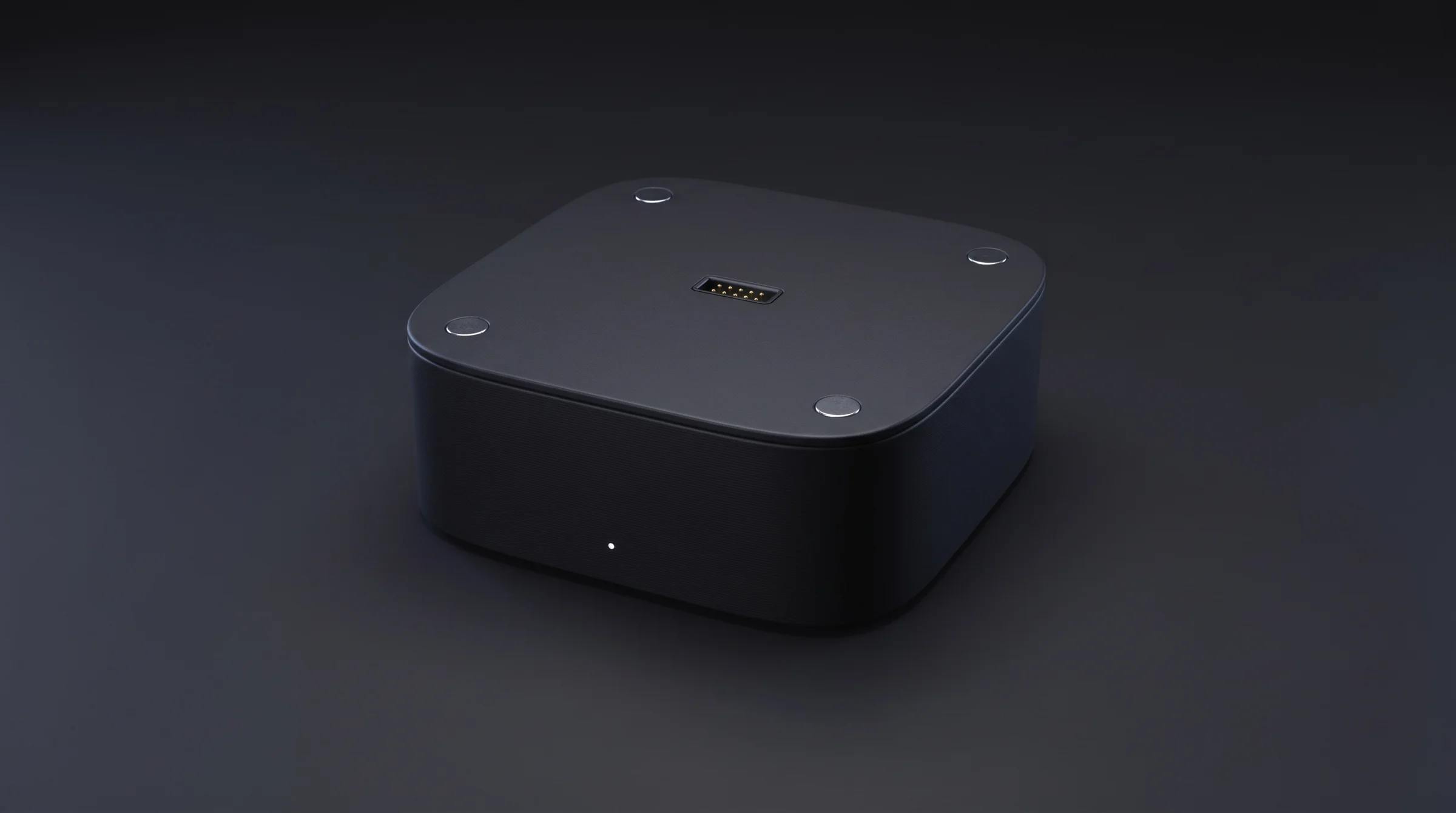
The STRAT base, alone on a dark surface: a low box in matte black PLA, with four small magnets in the corners of the top face, the connector window in the centre and a white status dot on the front.

The base.

The brain, the power, the bus.

  • The brain sits low, where there is room and it stays cool.

  • The base knows what you have put on it.

  • The bottom cover opens with a fingernail.

  • The lamp has its own page, in your network.
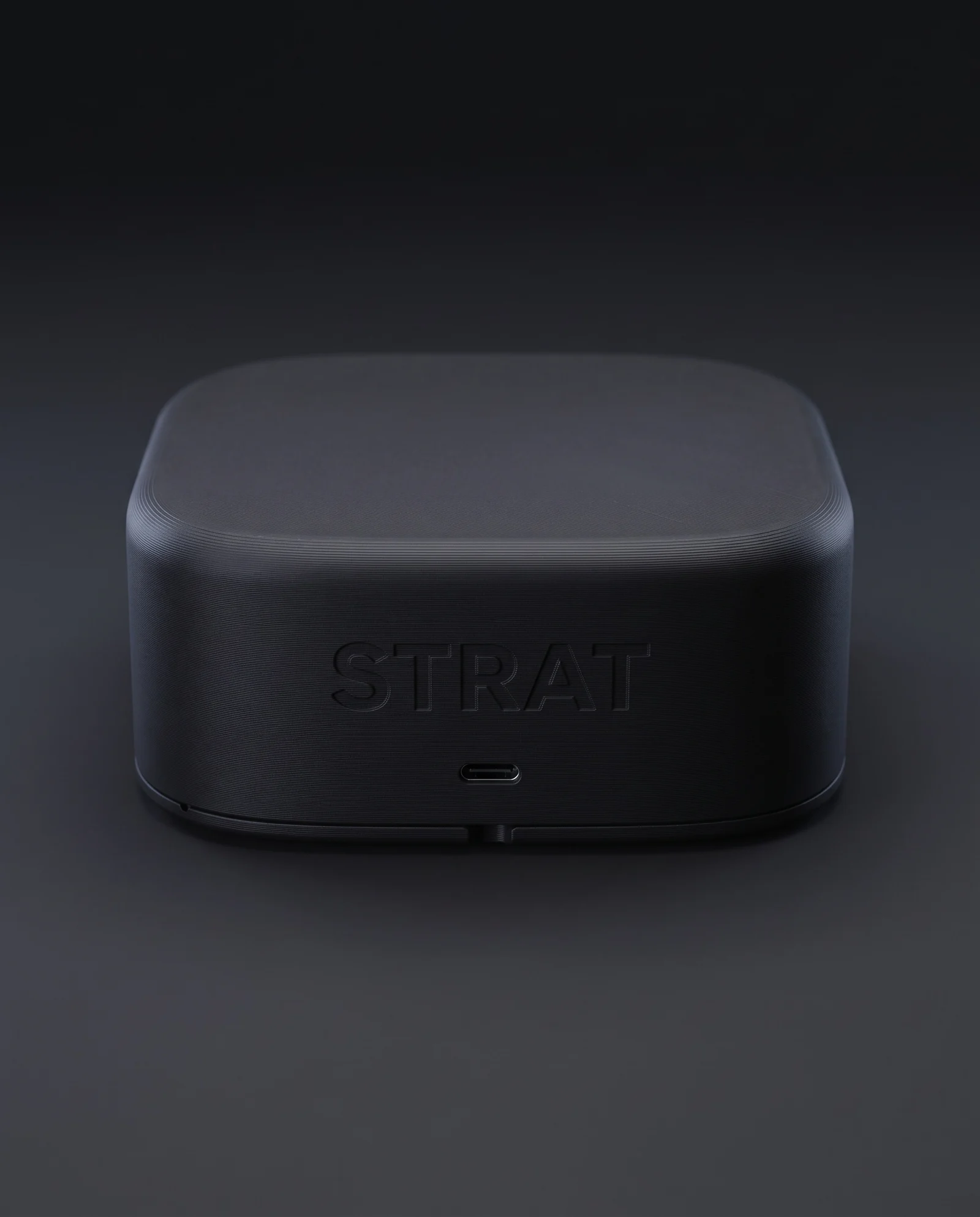
The back of the base: the engraved logo, the USB-C port and the cover notch.
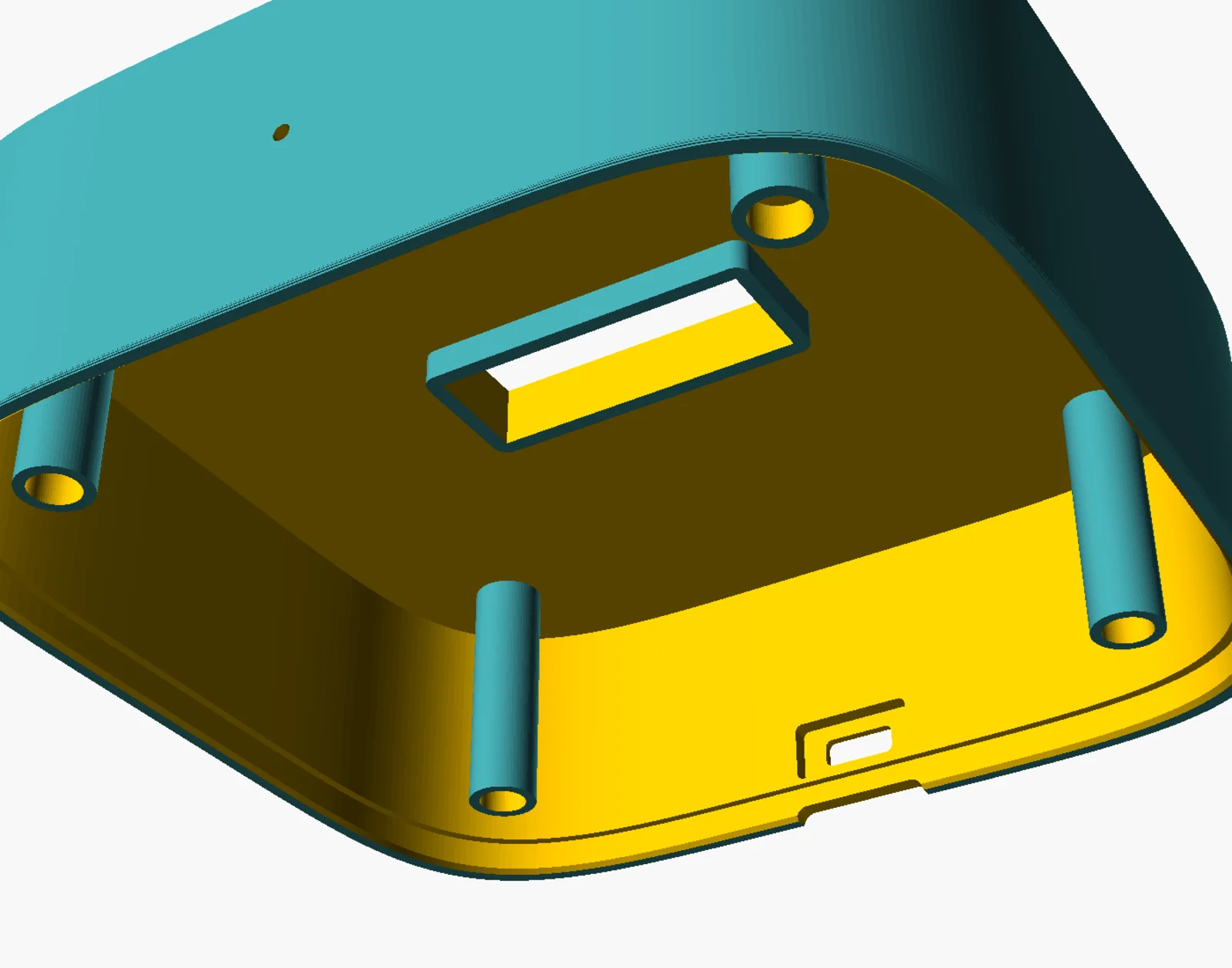
Drawing from the 3D model, the base seen from underneath: the cover pocket, the magnet bosses and the connector window.
Underneath: the cover pocket, the magnet bosses and the connector window.
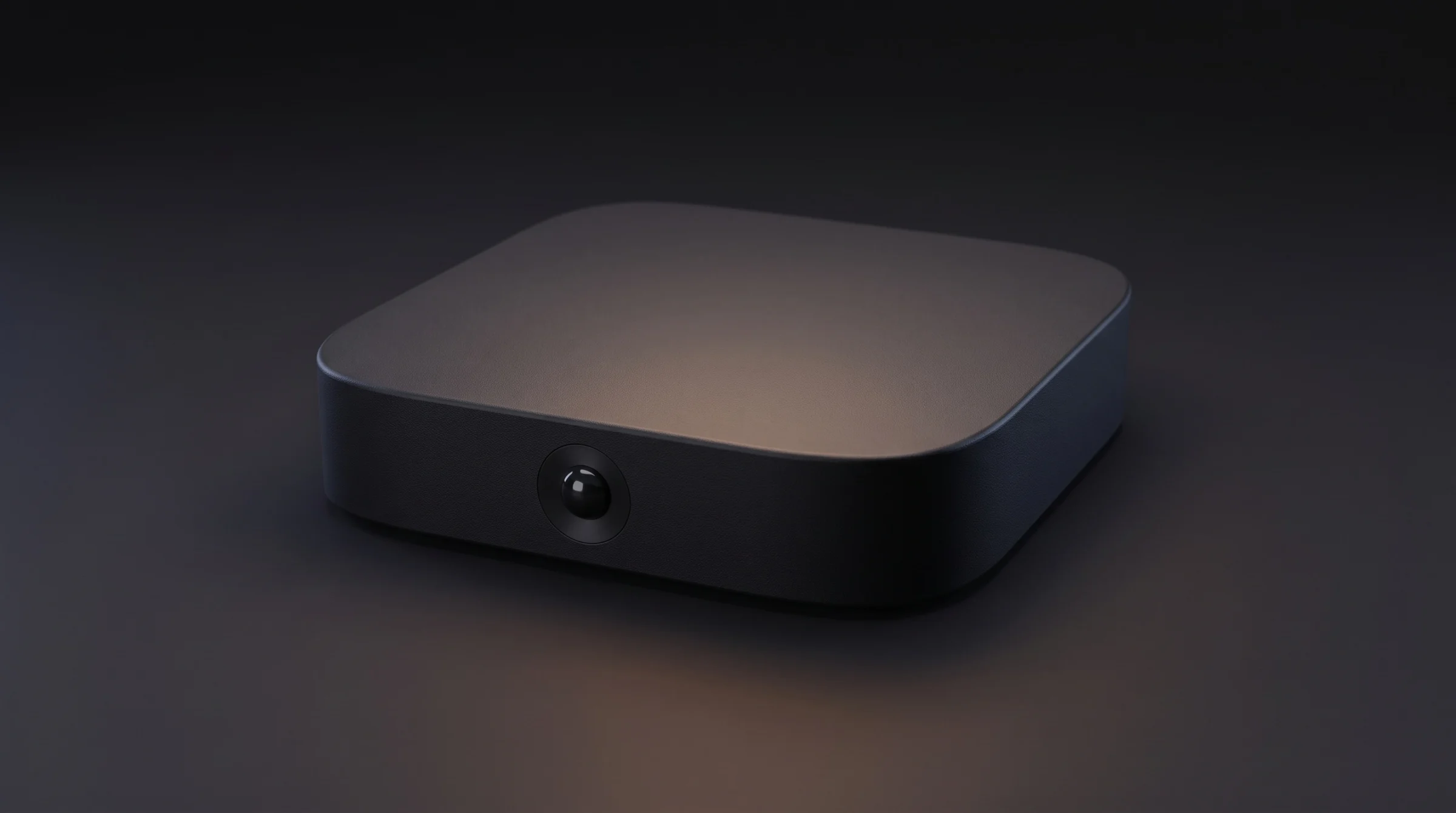
The sensor module, alone on a dark surface: a matte black square plate with a single round eye on its face.

The sensors.

An eye toward the floor, air and temperature.

  • A sensor that only sees moving heat.

    The motion sensor is a PIR. It only sees heat that moves within its cone, and the cone is tilted 20 degrees down, toward the floor. The lamp has no camera and no radar.

    Next to the PIR, in the same eye, sits a light sensor. If the room is already lit, the lamp does not come on.
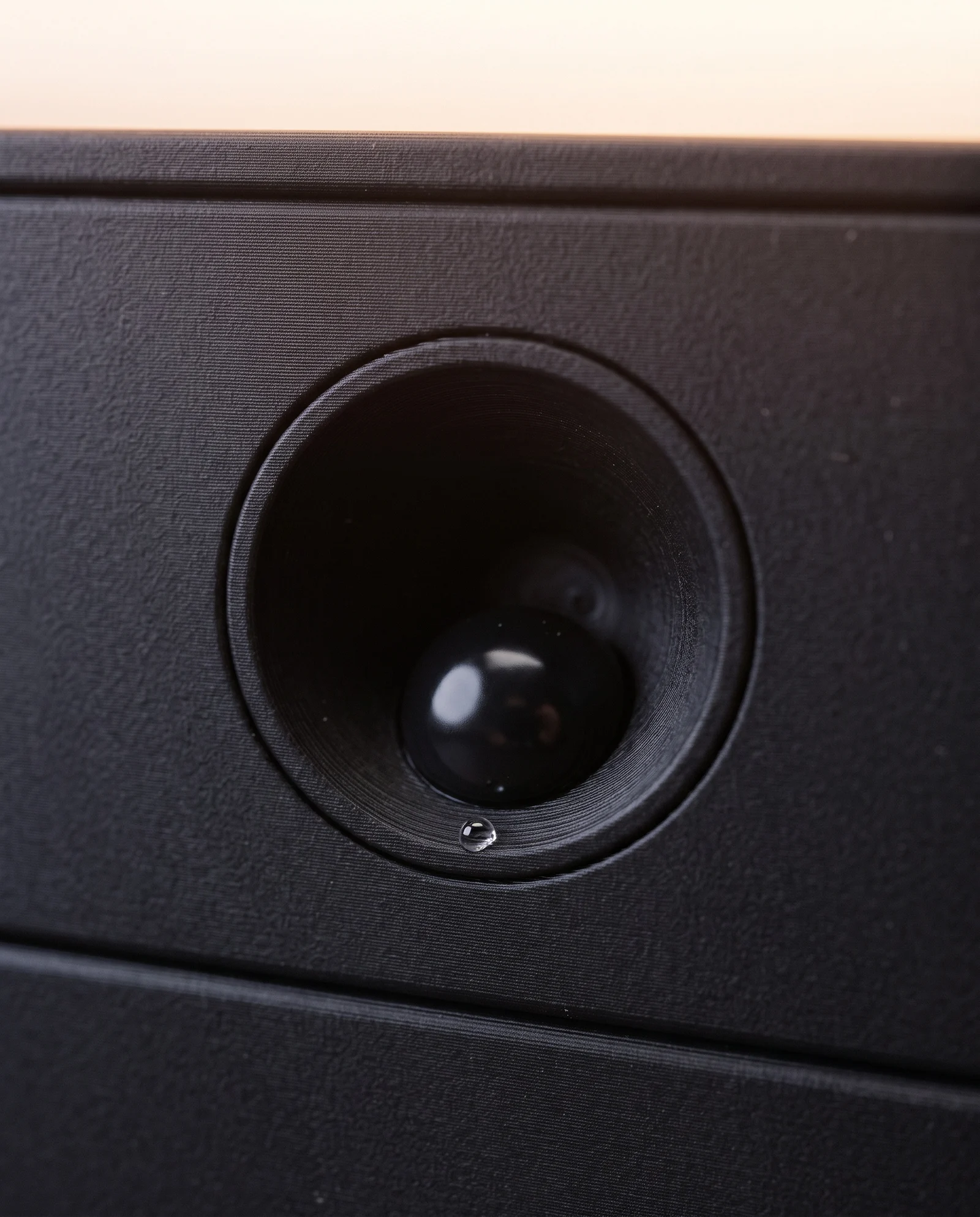
Detail of the sensor module's eye: the narrowing cone, the PIR dome at its bottom and the light-guide dot at six o'clock.
The eye is 17 millimetres at the mouth and narrows to 9.2. The PIR dome sits at the bottom of the cone, and the dot at six o'clock is the end of the light guide.
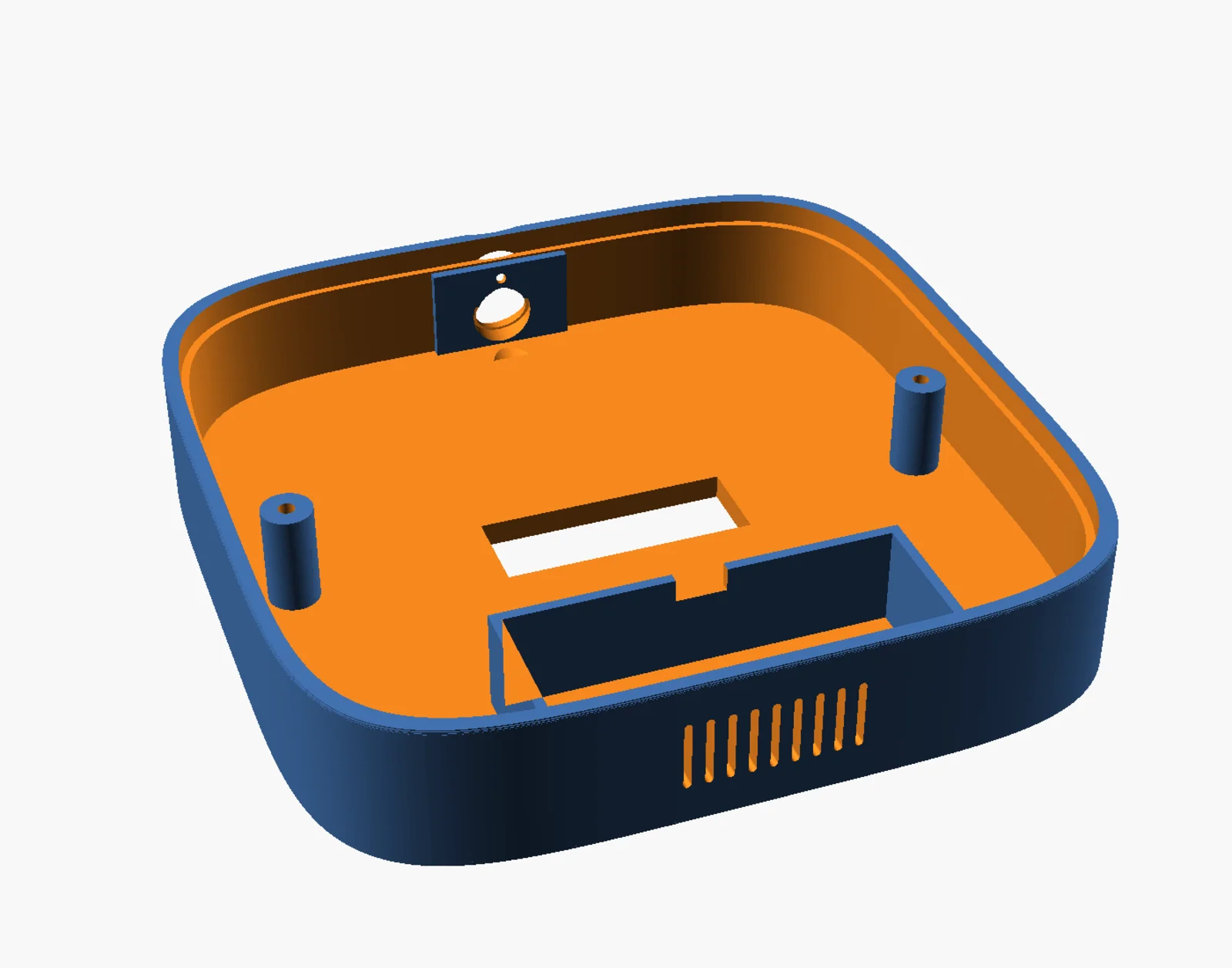
Drawing from the parametric model of the sensor housing: the eye at the front, the air chamber with its nine slots at the back, the connector window in the middle.
The housing, in the parametric model: the eye at the front, the air chamber with its nine slots at the back, the connector window in the middle.
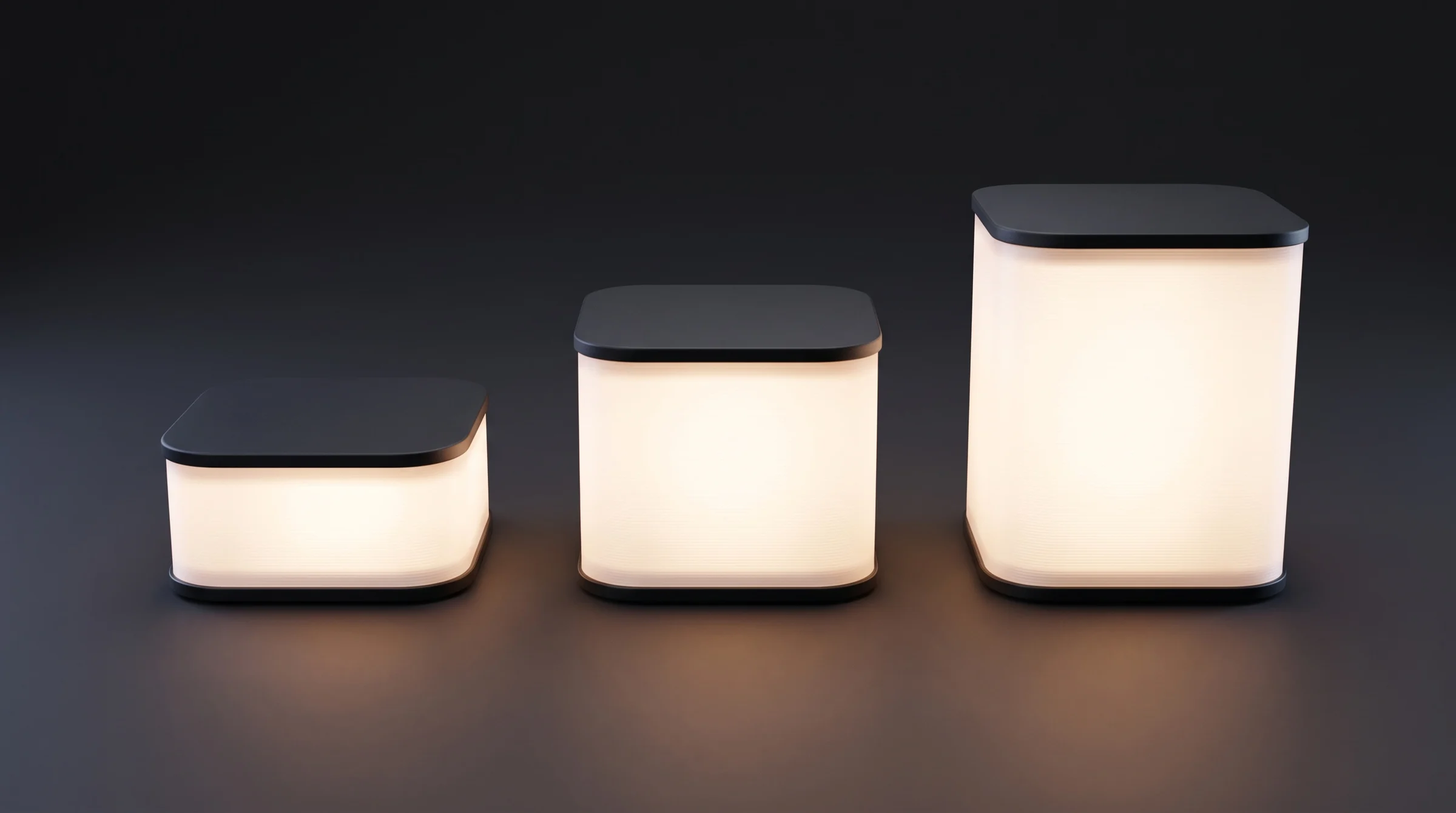
Three slices of light, S, M and L, lit in warm white, each with a black cap, side by side on a dark surface.
S, M and L on the same base. The width does not change, only the diffuser grows.

The light.

Slices of warm light, in three heights.

  • A ring of light in place of the bulb.

  • Three heights, the same frame.

  • A diffuser from a single line.

  • From night watch to sunrise.

    The lamp has a handful of states, each with its own purpose. Veghe, the night watch, is the dimmest light, for the night when you get out of bed and do not want to wake anyone. Relax is warm and low, for the evening. Focus is whiter and stronger, for the table you work at.

    Apus, the sunset, lowers the light slowly, over tens of minutes, from warm white toward orange, until it goes out. Răsărit, the sunrise, goes the other way, in the morning, before the alarm. Prezență, presence, is the answer to the sensor module: when someone walks past the lamp at night, the slice comes on dimly, toward the floor, and switches itself off.

    All the states are changed from the lamp's web page, in your network, with no account and no cloud.
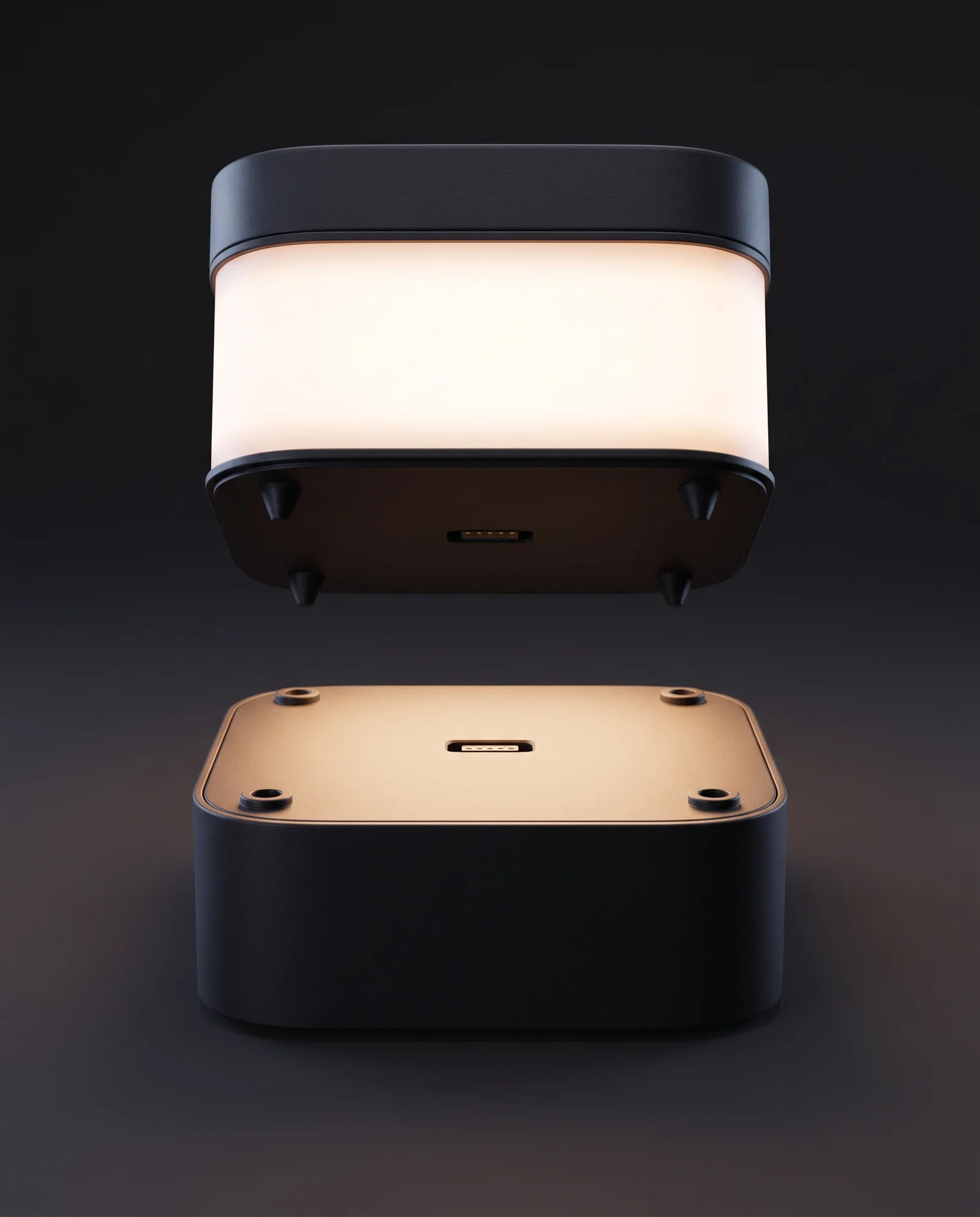
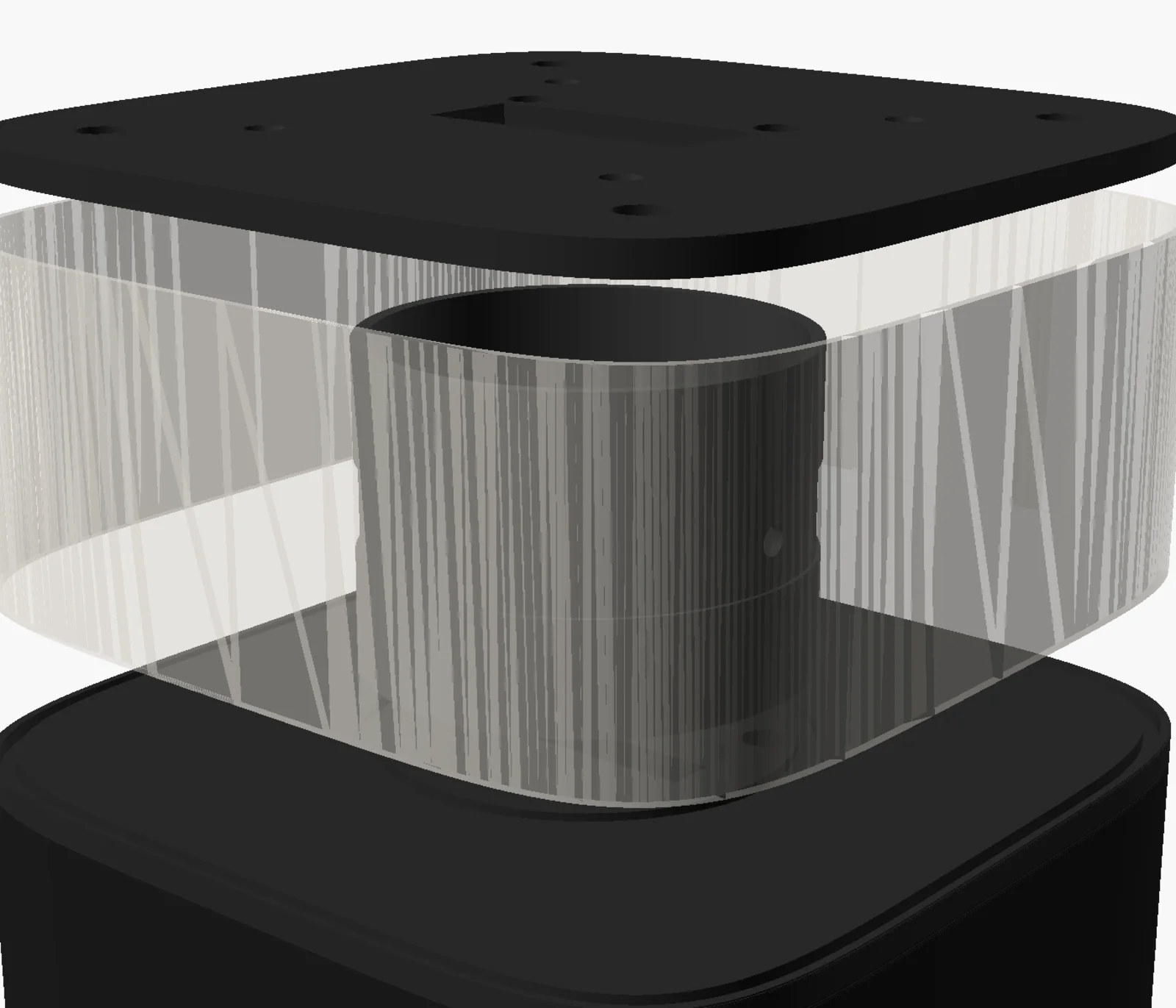
Detail under the frame of a light slice: four conical pins enter the sockets of the base.
Under the frame, four conical pins enter the sockets of the base, and the slice settles into place on its own.
Drawing from the 3D model: the light slice taken apart into cap, diffuser, core and frame.
The slice taken apart, from the 3D model: cap, diffuser, core and frame.
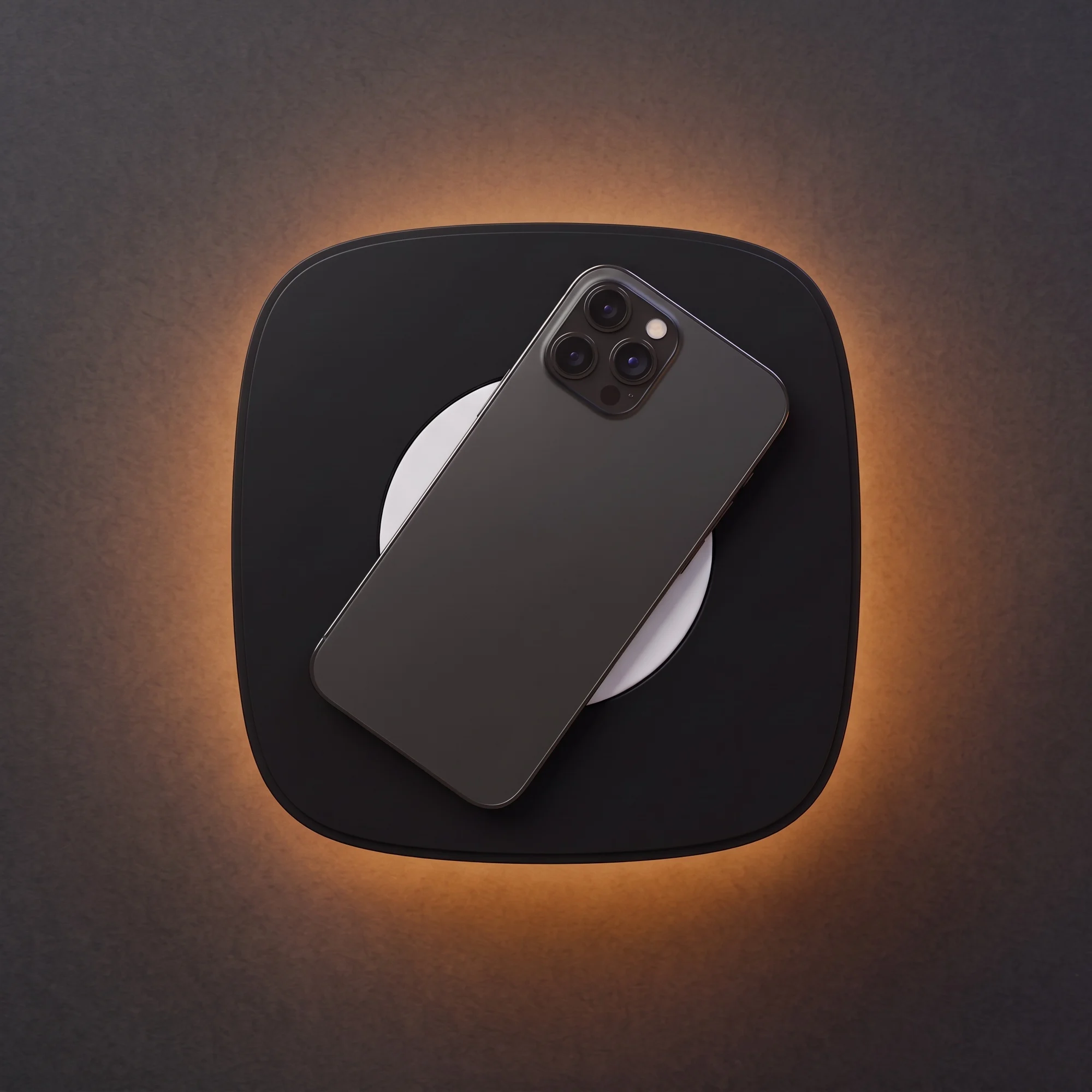
The charging module seen from above: the white puck set into the black cap, with the phone lying on it, and the lamp's warm light around.
Seen from above. The white puck is set into the cap, and the phone lands on it without hunting for the position.

The charger.

A holder for the phone's charger.

  • A recess for the original charger.

  • The phone lies flat. The watch, later.

  • We promise no charging speeds until we have measured them.
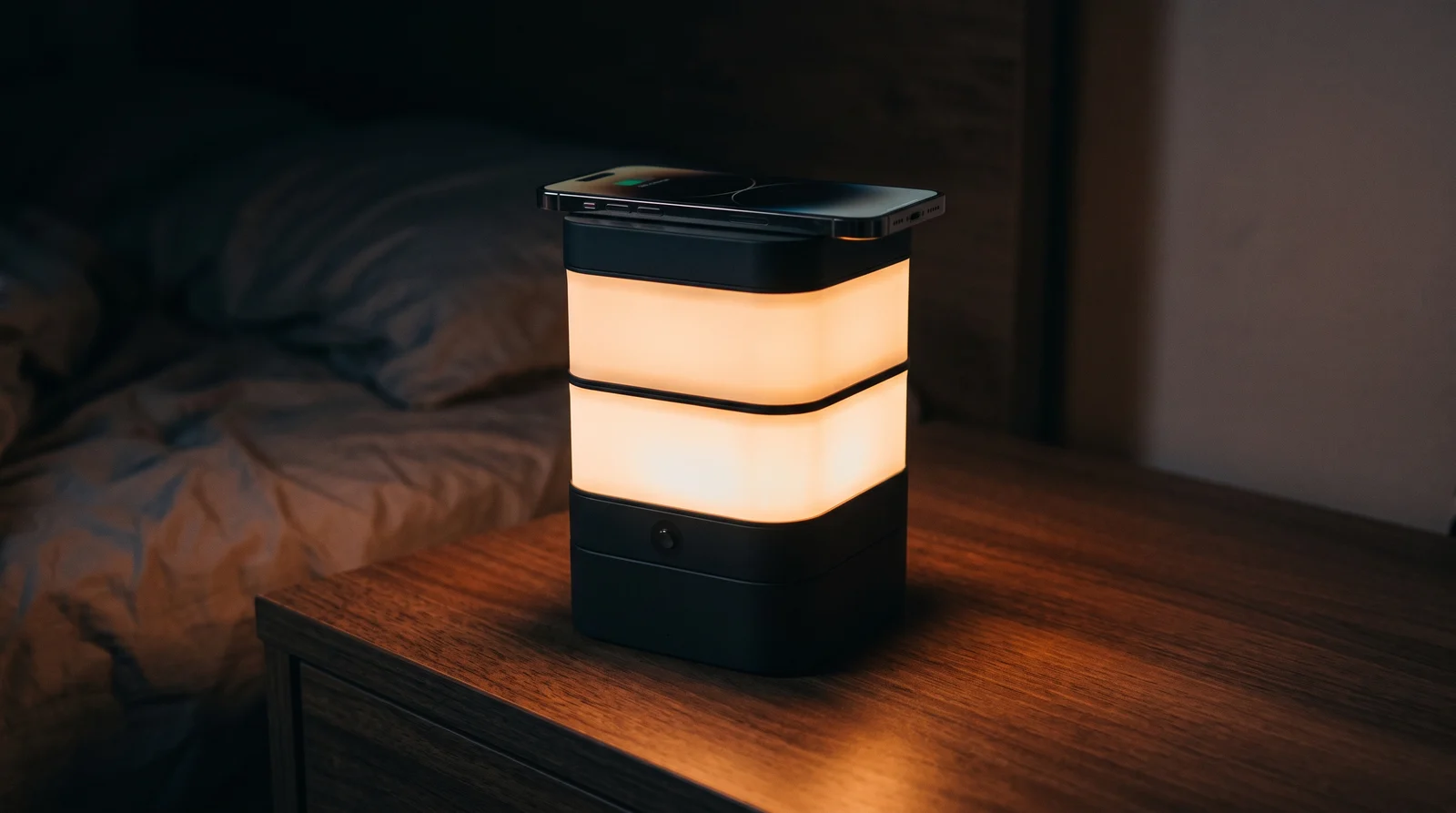
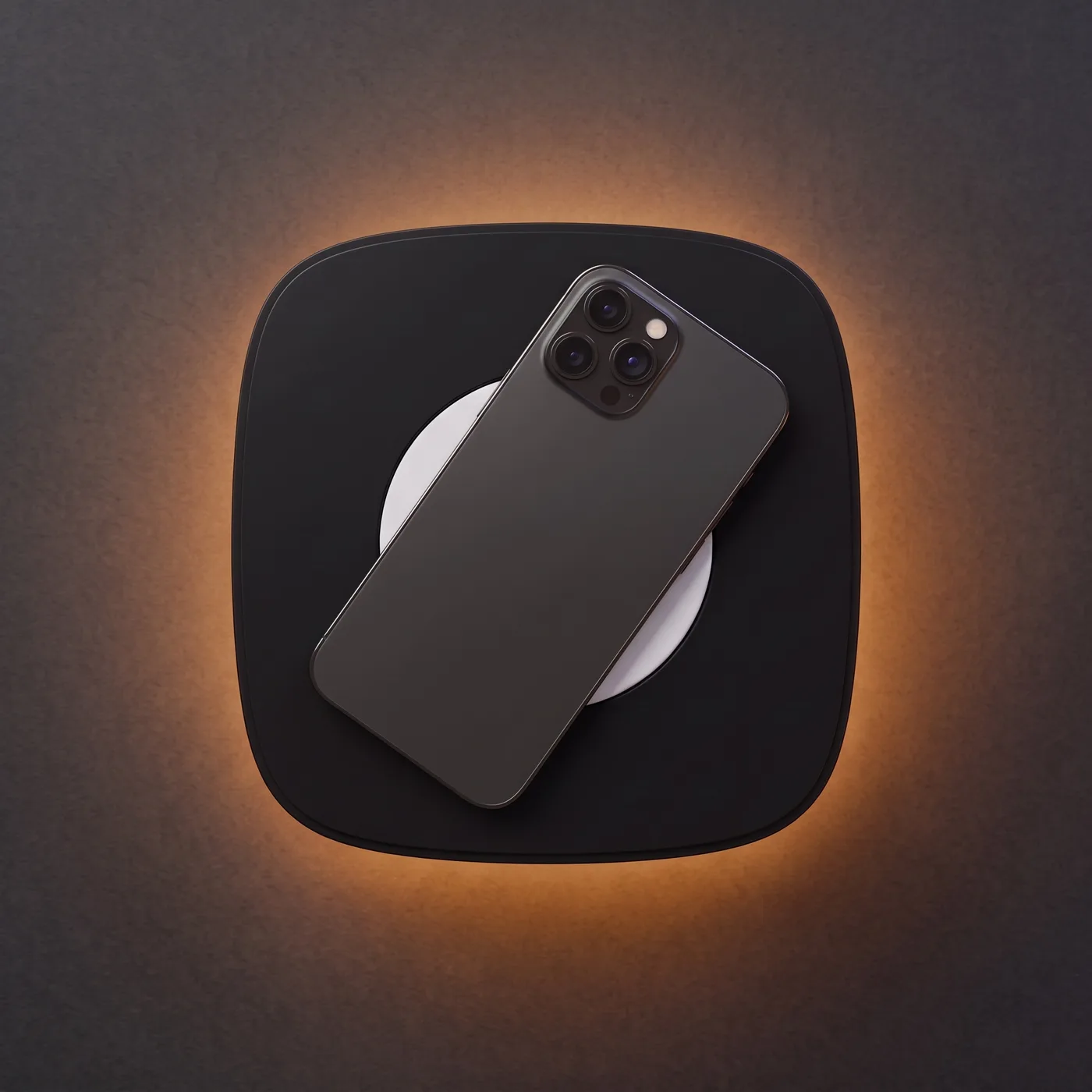
Render: the phone lying on the lamp, on the nightstand, in the bedroom.
Render. The phone lying on the lamp, in the bedroom.
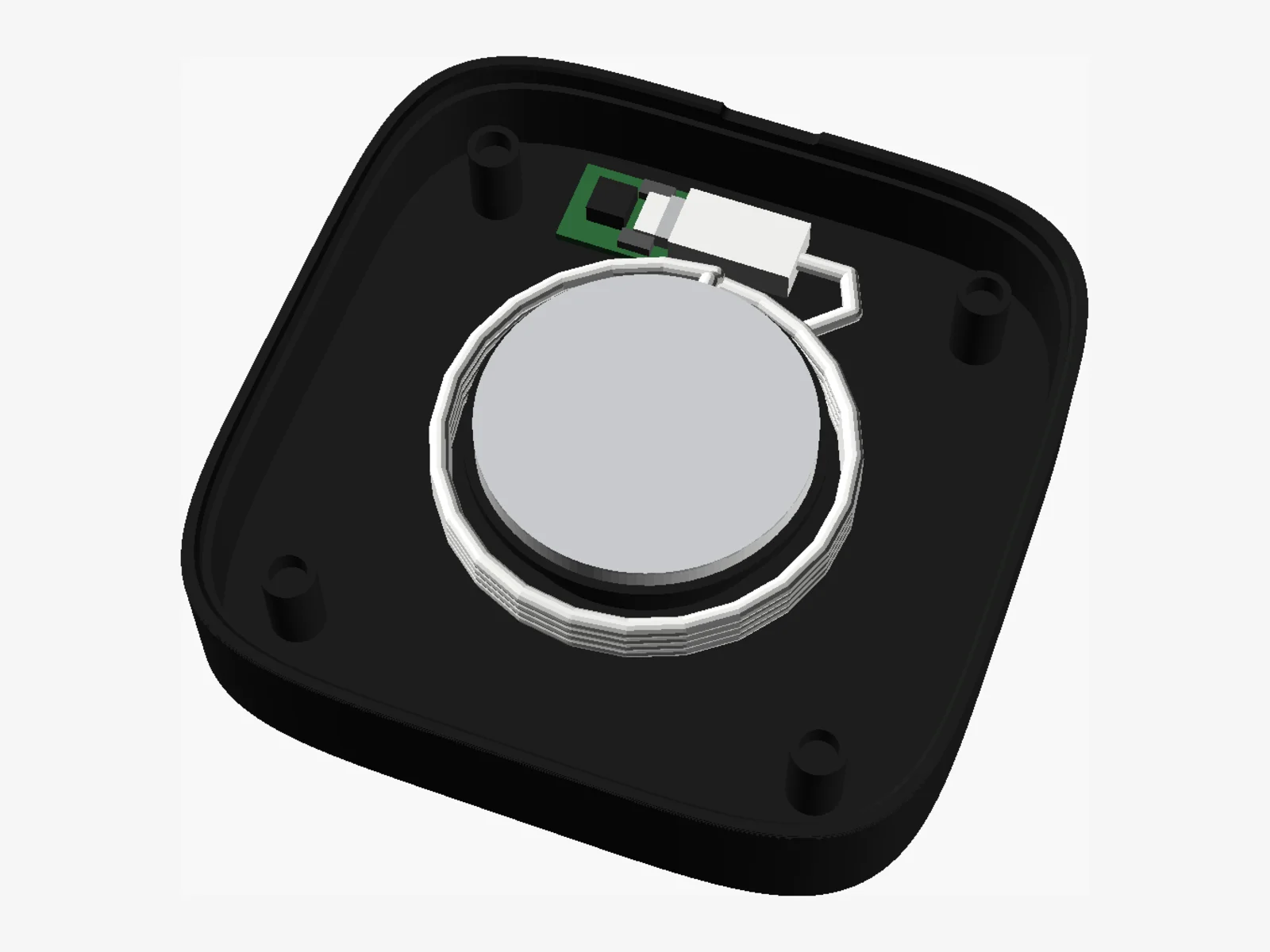
Drawing from the 3D model, the charging module without its cap: the cable makes a few turns around the puck and enters the small board at the back.
Drawing from the model, without the cap. The cable makes a few turns around the puck and enters the small board at the back.

At a glance.

Modular.
It builds vertically, layer by layer. Every layer is a separate part, which you take off by hand.
Magnetically held.
The layers attach magnetically, in a single orientation, and the base recognises on its own what you have put on it.
3D printed in Romania.
In small batches, to order, on a single printer.
In your network.
Everything the lamp does happens inside your home, on a Raspberry Pi Pico 2 W with ESPHome, an open firmware. It asks for no account and has no subscription.
The size of a Mac mini.
127 millimetres to a side, corners with continuous curvature and layers on a 4 mm grid.
Warm light.
RGBW LEDs with warm white, a matte diffuser and three slice heights. Stack as many as you need.
At night, only the floor.
When you get up from bed, the floor-facing sensor slowly lights the bottom layer. It switches itself off.
The phone, on top.
A recess for the original MagSafe charger, with the cable kept inside. No wire in sight.
Held magnetically.
Four magnets and eight contacts, a single possible orientation, no tools.
Open.
Its own web page in your network, no account and no cloud.
The STRAT lamp seen from above, with its square layers, in the Graphite finish.
The lamp seen from above. A render of the current design.

Works with what you already have.

Nothing extra to install. The lamp speaks the languages your home already uses.

Home Assistant
Native API.
MQTT
Auto-discovery, with any broker.
Browser
The lamp's web page, in your network.
The original MagSafe charger
For the phone. The watch holder comes later.
USB-C
Power.
Matter
Through a bridge, later.

The first batch will be small.

STRAT is still a prototype: it has no price and no launch date. The images on this page are renders of the current design. If you want to know when the first batch starts, join the waiting list.

Join the waiting list

The images are renders of the current design, not photographs of the final product. Mac mini and MagSafe are trademarks of Apple Inc. STRAT is not affiliated with Apple.

Have a question or a project?

Write to us at [email protected]. There are two of us, so one of us will answer.